About ASL
What is American Sign Language (ASL)?
American Sign Language is a complete, natural language, used mainly in the United States and many parts of Canada. It uses the hands, the face and the body. It is a separate language from English, not English in signs.
- 1817
- The first permanent school for the deaf in the US opened in Hartford, Connecticut.
- 45 states
- had laws about ASL on the National Association of the Deaf's 2016 list.
- 200+ years
- One view is that ASL grew from local sign languages mixing with French Sign Language.
- 1 hand
- ASL fingerspelling uses one hand. BSL uses two.
Three things people often get wrong
Not true"Sign language is the same everywhere."
There is no universal sign language. Countries and regions have their own.
Not true"ASL is English in signs."
ASL is a language completely separate from English, with its own rules for pronunciation, word formation and word order.
Not true"English-speaking countries share a sign language."
They don't. ASL and British Sign Language are different languages, and people who know one may not understand the other.
How it works
ASL has all the parts of any language: its own rules for how signs are made, how they are built and what order they go in. The hands are only part of it.
Hands
The shape of the hand, where it is placed and how it moves.
Face
To ask a question, English speakers raise the pitch of their voice. ASL users raise their eyebrows, widen their eyes and tilt their body forward.
Space and body
Where signs are made in the space in front of the signer, and how they hold their body, are part of what is said.
Where it came from
- Over 200 years ago
Nobody invented ASL. One view is that it grew from local sign languages mixing with French Sign Language.
- 1817
On 15 April the American School for the Deaf opens in Hartford, Connecticut. Thomas Hopkins Gallaudet asked Laurent Clerc, a young deaf teacher from the school for the deaf in Paris, to help set it up. Clerc brought French Sign Language and the manual alphabet to the school.
- 2016
The National Association of the Deaf's list, last updated in February, counts 45 states with laws about ASL. Many let it count as a language for high school or college credit.
- 2019
The Accessible Canada Act recognises ASL, Quebec Sign Language and Indigenous sign languages as the main languages deaf people in Canada use to communicate.
Signs change from place to place
ASL has regional accents and dialects. Signs, rhythm, pronunciation and slang vary from region to region, and with things like age and gender.
Black ASL is a distinct variety of ASL. Gallaudet University's Black ASL Project studied its history and structure in the South, where Black and white deaf children were taught in separate schools.
When members answer "What's the sign for…?" here, they can say where their sign is used. In the sign dictionary you can look for signs used near you.
See it signed
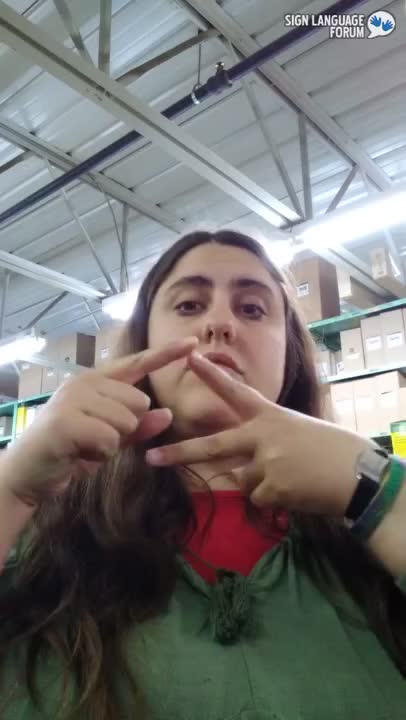
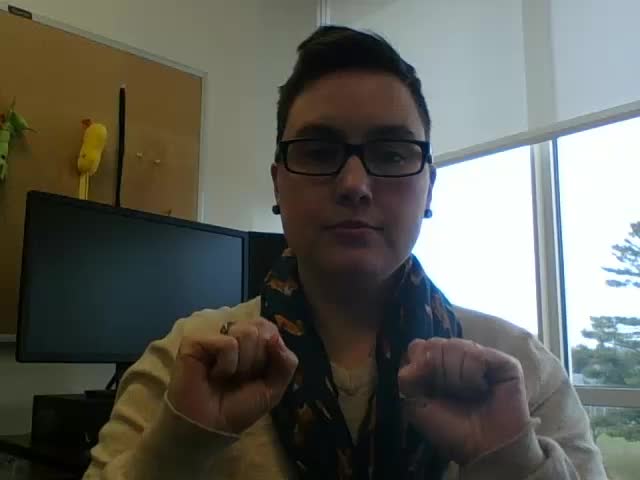
Members have asked about 16 words in the ASL sign dictionary, and 7 have a signed answer on video. Some of the newest:




Sign language isn't international
Each country has its own sign language. ASL is linked to French Sign Language, which Laurent Clerc brought to Hartford in 1817. ASL and British Sign Language are different languages, and their alphabets aren't related.
In Canada, ASL is used alongside Quebec Sign Language and Indigenous sign languages.
Fingerspelling
ASL fingerspelling uses one hand, with a handshape for each letter. It is used to spell out English words.
Learning ASL here
Sources
- American Sign Language (National Institute on Deafness and Other Communication Disorders (US))
- What is American Sign Language? (National Association of the Deaf)
- State laws and regulations referencing the legitimacy of ASL (list current as of 15 February 2016) (National Association of the Deaf)
- History (American School for the Deaf)
- Padden and Gunsauls (2003), How the alphabet came to be used in a sign language, Sign Language Studies 4(1) (University of California, San Diego)
- Baker and others (2026), Sociocultural perspectives of deaf parents on child-directed fingerspelling, Journal of Deaf Studies and Deaf Education (Texas Woman's University)
- About the Black ASL Project (Gallaudet University)
- Accessible Canada Act (S.C. 2019, c. 10), section 5.1 (Justice Laws Website, Government of Canada)
Last checked against these sources on 19 November 2026. If you spot a mistake, please tell us.